
Marketing Automation – The Method
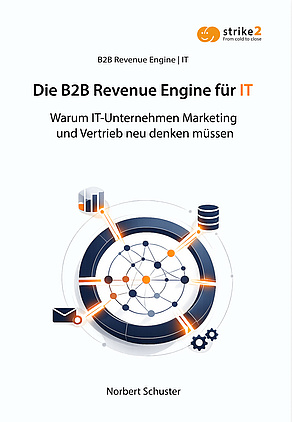
How Marketing, Sales, Service and Recruiting become one Engine – with Method and AI
Marketing automation does not begin with software. It begins with understanding what should happen, for whom, at which moment – and why.
Many companies approach marketing automation from the technology side. They select a platform, connect it to their CRM, create workflows and start sending automated emails.
Technically, they have marketing automation.
But do they have a marketing automation system?
“Marketing Automation – The Method” takes a broader approach. It shows how Marketing, Sales, Service and Recruiting can be connected through a common methodology – and how processes, data, automation and artificial intelligence can turn these functions into an integrated B2B Revenue Engine.
The objective is not simply to automate more.
The objective is to automate the right things at the right time for the right people.
Marketing Automation is more than a platform
A marketing automation platform provides technology. It can recognize triggers. Send emails. Score contacts. Segment target groups. Start workflows. Transfer data. Personalize content. And increasingly use artificial intelligence to support these activities. But the platform cannot answer the fundamental business questions on its own: Who are the people we want to reach? What are they trying to achieve? Where are they in their journey? What information do they need next? When should Marketing continue nurturing them? When should Sales become involved? What happens after the purchase? Which signals indicate new potential? That is why technology alone does not create marketing automation. The method creates the system. Technology makes it scalable.
From isolated workflows to one Engine
In many companies, automation develops incrementally. Marketing creates campaigns and nurturing workflows. Sales works with CRM sequences and opportunity processes. Service operates its own customer communication. Recruiting introduces automated candidate journeys. Each individual initiative can be useful. But together, they do not necessarily form a system. The result is often a collection of automations rather than an automation architecture. The alternative is to start with a common logic:
People → Situations → Journeys → Signals → Decisions → Actions → Learning
This logic can then be applied across the entire organization.
The B2B Revenue Engine
The central metaphor of the book is the Engine. An engine does not create performance because one component works particularly hard. It creates performance because its components interact in a coordinated way. The same applies to modern B2B organizations. Marketing attracts and develops potential customers. Sales turns relevant interest into business opportunities and customer relationships. Service delivers value, strengthens loyalty and recognizes new potential. Recruiting attracts and develops the people the organization needs to operate and grow. Data connects these activities. Automation makes them scalable. Artificial intelligence increases the ability to analyze, interpret and act. One method.
One data foundation. One Revenue Engine.
Marketing: Attract the right people
Marketing automation should not begin when somebody fills out a form. The customer journey begins much earlier. Potential customers recognize problems, search for information, compare approaches, consume content and develop preferences – often before they become identifiable to a provider. Marketing therefore needs to create relevance before it can automate relationships. The question is not simply: How do we generate more leads? It is: How do we become relevant to the right people before they are ready to talk to Sales? This requires an understanding of target customers, buyer personas, situations, needs, questions and information behavior. Only then can automation support the journey meaningfully.
From the Dark Funnel to visible signals
A large part of the B2B buying journey takes place anonymously. Potential customers visit websites. Read articles. Watch videos. Listen to podcasts. Follow discussions. Use search engines and AI systems. Talk to colleagues. Compare possible solutions. For the provider, much of this activity initially remains invisible – part of the Dark Funnel. The challenge is therefore not to identify every anonymous visitor as quickly as possible. The challenge is to create enough relevance for the right people to return, engage and eventually reveal meaningful signals. Automation becomes valuable when these signals can be connected to context.
Customer Journey before Workflow
A common mistake is to start automation design with the workflow: Trigger → Email → Wait → Email → Score → Sales That is technically convenient. But it starts from the system rather than from the customer. A method-driven approach reverses the sequence. First understand the journey. What is the person trying to accomplish? What does this person already know? What is still unclear? What creates uncertainty? Which information could help? What would constitute a meaningful next step? Only after these questions have been answered should the workflow be designed.
Customer Journey first. Automation second.
Nurturing: Develop relationships instead of pushing leads
Not every interested person is ready to buy. And not every identified contact should immediately be transferred to Sales. This is where Lead Nurturing becomes important. Nurturing means systematically developing relevance and relationships over time. The objective is not to increase email frequency. The objective is to help the potential customer move forward. Good nurturing can: create orientation, deepen understanding, reduce uncertainty, build trust, demonstrate expertise, support internal decision-making, and prepare the next meaningful interaction. Automation makes this scalable without turning communication into a rigid sequence.
Recognizing readiness
One of the most important questions in B2B lead management is: When is the right moment for Sales? Too late, and an opportunity may already be lost. Too early, and the customer experiences the contact as unwanted pressure. That makes readiness more important than simple identification. Behavioral signals, profile information, account information, engagement patterns and context can help estimate where a person or organization is in its journey. Lead scoring can support this process. But a score should never become an unquestioned truth. It is a model for interpreting signals. The purpose is to improve timing.
Marketing and Sales: One journey, not two processes
Customers do not experience a “Marketing process” followed by a “Sales process.” They experience one relationship. The transition from Marketing to Sales should therefore not feel like a system break. Information already provided by the customer should not disappear. Questions already answered should not have to be asked again. Signals recognized by Marketing should be available to Sales. And Sales should understand why this person or account is relevant now. This requires shared definitions. When is a lead marketing qualified? When should Sales accept it? Which information must accompany the handover? What happens when Sales determines that the timing is not right? A functioning Revenue Engine needs a closed loop rather than a one-way handover.
Sales: Turn interest into opportunities
Automation does not replace personal selling. It changes where personal selling creates the greatest value. Sales becomes particularly important when situations become complex. When several stakeholders are involved. When requirements need to be understood. When alternatives must be evaluated. When risks need to be discussed. When decisions have to be facilitated. Automation can prepare these situations. It can provide context, identify signals, structure information and recommend next actions. But the human interaction remains essential where judgment, empathy, negotiation and relationship-building matter.
Automation should not eliminate the salesperson. It should make the salesperson more relevant.
Service: The Engine continues after the sale
Many automation concepts effectively end when the contract is signed. But economically, the customer relationship may only be beginning. Onboarding. Usage. Support. Customer development. Retention. Cross-selling. Up-selling. Recommendations. All of these create additional journeys and signals. Service therefore becomes an integral part of the Revenue Engine. A support request can indicate dissatisfaction. But it can also reveal a new requirement. Usage behavior can indicate risk. Or additional potential. Customer feedback can trigger an intervention. Or identify a promoter. The same methodological logic used for lead development can therefore be applied to existing customer development.
From customer acquisition to customer development
This changes the economic perspective on marketing automation. Instead of asking only: How can automation help us win more customers? the question becomes: How can automation help us develop relationships throughout the customer lifecycle? That includes: acquisition, onboarding, adoption, loyalty, retention, cross-selling, up-selling, and advocacy.
The Engine does not stop at the purchase. It keeps turning.
Recruiting: The same logic, a different journey
Recruiting initially appears to be a separate discipline. But methodologically, many of the challenges are remarkably similar. Companies need to attract the right people. Create relevance. Build trust. Understand needs and motivations. Recognize signals. Develop relationships. Enable decisions. And create a positive experience across multiple touchpoints. The customer journey becomes a candidate journey. Lead nurturing becomes candidate nurturing. Employer content creates attraction. Automation supports communication and timing. The target is different. The underlying method remains similar. That is why Recruiting can become another component of the same automation logic.
Data: The fuel of the Engine
Automation needs data. But more data does not automatically create better automation. The decisive questions are: Which data is actually relevant? Where does it come from? How reliable is it? Who owns it? How is it updated? How can it be connected across systems? And what decisions should it support? A fragmented data landscape creates fragmented automation. Marketing knows one part of the customer. Sales knows another. Service has additional information. And Recruiting operates separately again. The Revenue Engine requires a coherent data foundation that allows signals to become meaningful across processes.
Artificial Intelligence changes the Engine
AI significantly expands what automation systems can do. Traditional automation is largely rule-based: If X happens, do Y. AI adds interpretation. It can summarize information. Recognize patterns. Classify content. Analyze signals. Generate variants. Support personalization. Recommend actions. Identify anomalies. Assist with forecasting. And help employees make sense of large amounts of information. This creates a transition from pure workflow automation toward increasingly adaptive automation. But the same principle still applies: AI cannot compensate for a missing method. If the objective, journey, process or data foundation is unclear, artificial intelligence may simply automate confusion faster.
Human Intelligence + Artificial Intelligence
The most productive perspective is therefore not: Human or AI? It is: Human Intelligence + Artificial Intelligence. Humans contribute context. Experience. Judgment. Empathy. Responsibility. Creativity. And an understanding of meaning. AI contributes speed. Pattern recognition. Scalability. Data processing. Variation. And analytical support. The combination is stronger when each side is used where it creates the greatest value.
Method before technology
This leads to one of the central principles of the book: Do not begin with the platform. Begin with the business objective. Then understand the people involved. Map their journeys. Identify relevant signals. Define decisions. Design processes. Clarify responsibilities. Determine the required data. And only then configure technology and automation. The sequence matters. Otherwise, companies risk digitizing and automating processes that should first have been redesigned.
What you will take away from this book
“Marketing Automation – The Method” provides a systematic perspective on automation across the B2B Revenue Engine. Key topics include:
- B2B Marketing Automation
- the Revenue Engine
- customer and candidate journeys
- Buyer Personas and target groups
- Dark Funnel and Demand Generation
- Lead Management
- Lead Nurturing
- Lead Scoring and readiness
- Marketing and Sales Alignment
- Sales Enablement
- Service Automation
- existing customer development
- Cross-Selling and Up-Selling
- Recruiting Automation
- data and integration
- processes and workflows
- Revenue Operations
- Artificial Intelligence
- Human Intelligence + AI
- scalable relationship development
Who is this book for?
“Marketing Automation – The Method” is written for managers and practitioners who want to move beyond isolated automation workflows and build a systematic approach. It is particularly relevant for: Marketing leaders who want to turn campaigns and tools into a coherent automation system. Sales leaders who want better timing, better context and better-prepared conversations. Service and Customer Success leaders who want to systematically develop existing customer relationships. Recruiting and HR teams interested in transferring automation principles to candidate journeys. Revenue Operations professionals responsible for connecting processes, data and technology across functions. And CEOs and managing directors who want Marketing, Sales, Service and Recruiting to work as parts of a coordinated system rather than isolated departments.
From automation to orchestration
The next stage of marketing automation is not simply more automation. It is better orchestration. Knowing when technology should act. Knowing when AI should assist. Knowing when a human should take over. And ensuring that each interaction contributes to the development of the relationship. That is the difference between automating individual activities and building an Engine. One method. Connected journeys. Shared data. Automation and AI. Marketing, Sales, Service and Recruiting working together.
That is the idea behind: Marketing Automation – The Method
Bibliographic Information
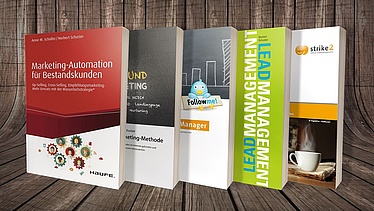
Title: Marketing Automation – The Method
Series: B2B Revenue Engine
Author: Norbert Schuster
Focus: Marketing Automation, Revenue Engine, Customer Lifecycle, Recruiting and Artificial Intelligence
Publisher: strike2 GmbH
Text, illustrations and cover design were created with the support of artificial intelligence and reviewed and edited by the author.

Häufige Fragen (FAQ)
Was ist eine B2B Revenue Engine?
Eine Revenue Engine ist ein integriertes System aus Marketing, Vertrieb und Daten, das darauf ausgerichtet ist, planbar Nachfrage zu erzeugen, Leads zu entwickeln und Umsatz zu generieren. Im Gegensatz zum klassischen Funnel steht nicht der einzelne Abschluss im Fokus, sondern ein dauerhaft funktionierendes Wachstumssystem.
Für welche Unternehmen ist dieses Buch geeignet?
Das Buch richtet sich an IT-Unternehmen mit komplexen Vertriebsprozessen, insbesondere Softwarehäuser, SaaS-Anbieter, Cloud-Provider und IT-Dienstleister. Es ist besonders relevant für Unternehmen mit längeren Sales Cycles und mehreren Entscheidern im Buying Center.
Ist das Buch auch für kleinere IT-Unternehmen sinnvoll?
Ja. Die Prinzipien der Revenue Engine sind skalierbar. Auch kleinere Unternehmen profitieren davon, Marketing und Vertrieb systematisch zu verbinden und Prozesse datenbasiert zu steuern – oft sogar schneller als größere Organisationen.
Geht es in dem Buch um konkrete Tools wie CRM oder Marketing Automation?
Nein. Der Fokus liegt bewusst nicht auf einzelnen Tools, sondern auf dem System dahinter. Sie lernen, wie Sie vorhandene Technologien sinnvoll orchestrieren, statt neue Tools einzuführen.
Was unterscheidet dieses Buch von klassischen Vertriebs- oder Marketing-Ratgebern?
Das Buch betrachtet Marketing und Vertrieb nicht isoliert, sondern als integriertes System. Es verbindet Strategie, Prozesse und Umsetzung und überträgt das Schuster-Modell® konkret auf die Anforderungen der IT-Branche.
Welche Rolle spielen Daten und KI im Buch?
Daten sind die Grundlage für Timing, Relevanz und Priorisierung. Das Buch zeigt, wie Sie Verhaltensdaten, Lead Scoring und Intent Data nutzen, um bessere Entscheidungen zu treffen. KI wird dabei als Verstärker gesehen – nicht als Ersatz für Strategie.
Wie schnell lassen sich die Inhalte in die Praxis umsetzen?
Viele Ansätze lassen sich sofort umsetzen, zum Beispiel im Bereich Lead Scoring, Nurturing oder Marketing-Vertriebs-Alignment. Eine vollständige Revenue Engine entsteht schrittweise, liefert aber bereits früh messbare Ergebnisse.
Warum funktioniert klassisches Lead Management in der IT oft nicht mehr?
Weil sich das Kaufverhalten verändert hat. Kunden informieren sich heute selbstständig und treten erst spät in den direkten Kontakt mit dem Vertrieb. Klassisches Lead Management greift zu kurz, wenn es nicht in ein ganzheitliches System eingebettet ist.
Was bringt mir das Buch konkret?
Sie erhalten ein klares System, um Marketing und Vertrieb neu auszurichten. Ziel ist es, mehr relevante Anfragen zu generieren, die Qualität von Leads zu erhöhen und Vertriebsprozesse planbarer zu machen.
Ist das Buch eher strategisch oder operativ?
Beides. Es liefert ein klares strategisches Modell und zeigt gleichzeitig konkrete Umsetzungsansätze für den Alltag in Marketing und Vertrieb.
News & Aktuelles von strike2